Building Culture and Creating Community with Jeff Schwartz
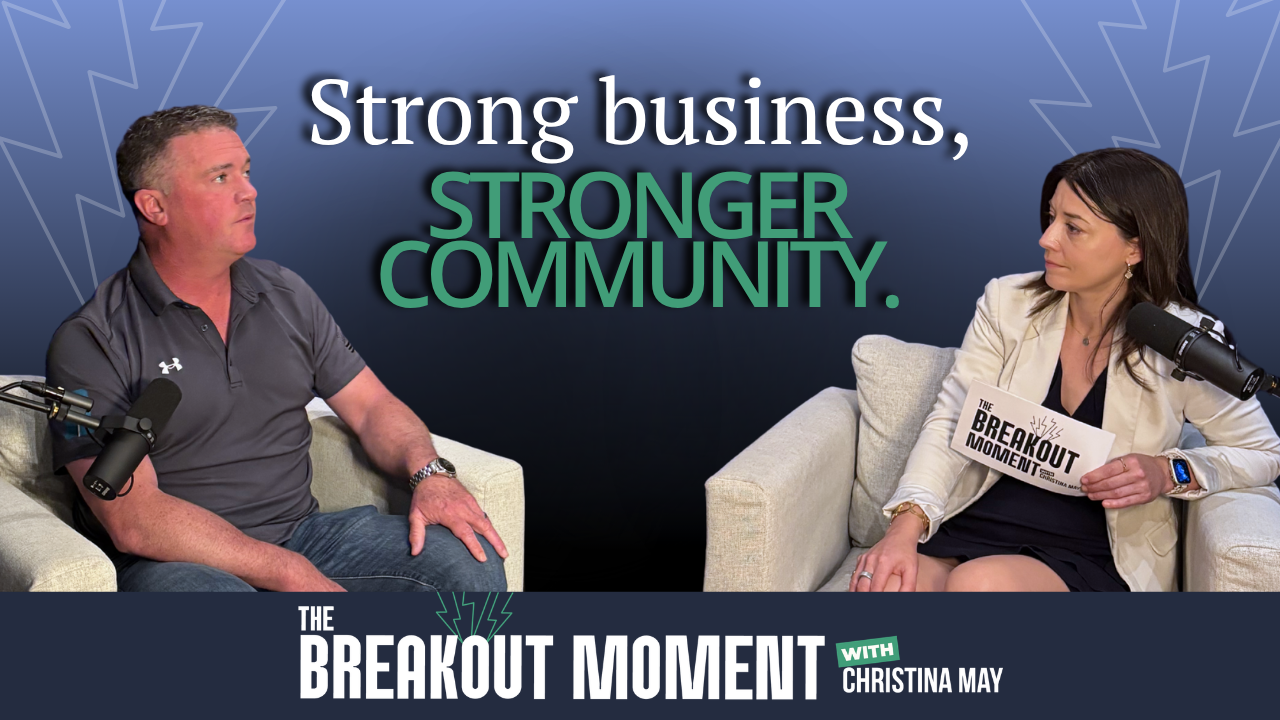
In this episode of The Breakout Moment, Christina May talks with Jeff Schwartz, founder and owner of Ashton Manor Environmental, about the role culture plays in building strong teams, meaningful work, and lasting organizations. Drawing from decades of leadership experience, Jeff shares insights on intentionally shaping workplace culture, creating environments where people can thrive, fostering community involvement, and building professional relationships that extend beyond the office. Together, they explore how leaders can create workplaces that inspire engagement, purpose, and long-term success.
Christina May: Well, Jeff, welcome to The Breakout Moment. I'm so happy to have you here today and really excited for you to kind of– we share somewhat similar stories of entrepreneurship. Some family background, too, and some inspiration there. So, why don't you kind of kick us off and talk about how you got started, and what you thought you were going to do, and how you ended up climbing trees.
Jeff Schwartz: All right, well, first, thanks for having me here. I'm excited to be able to be part of this and share my story. But I would say, growing up, I had a twin brother, and when I look back on the different big moments in my life, in elementary school, I had one particular teacher that really kind of made it clear that she thought I had some significant learning differences. She was probably right. She also made it clear to my parents and I that they should kind of lower their expectations. And I probably wasn't going to really excel at maybe anything in life. So, looking back, that was kind of one of these moments where I was like, okay, you know, I hear what you're saying, I'm processing that. And I think that sort of became a charge, both subconsciously and consciously, that I was gonna find a way to excel in life, both personally and professionally, and, kind of, you know, I'll prove you wrong type of thing.
CM: I think entrepreneurs kind of have a little bit of that in them.
JS: Right, right.
CM: My parents used to always say, we would tell you what not to do so you would do it right?
JS: Reverse psychology.
CM: That's right. Yeah. That's right. So. All right, so how'd you do with that?
JS: You know, I actually, through my high school years, started my first business, which was mowing lawns in the neighborhood, like a lot of people in landscaping maybe do. I recall that I really didn't think I wanted or needed to go to college. Fortunately, both my parents really did put an emphasis on higher education, and I did end up going to college and getting a degree in environmental science. I felt like you learn so much going through college, not often about what's in the classroom, but everything else, and some of the adversities you go through. And, coming out of college, I got into environmental consulting and found that world to be very heavily regulatory, government-focused, and mostly felt like nothing sort of ever got done.
It almost felt like that was by design. Lots of studies, lots of inventories, permit processing.
And I fast realized that I just didn't have the patience for that kind of environment. And then I shifted gears and started working for a local company that does a lot of environmental mitigation projects, restoration-type work. And I really did find that I enjoyed that.
And I also learned a lot that I didn't know about, sort of the tougher parts of the business, I guess. And the just so many aspects, from cradle to grave, of building a job. But even before that, try to develop relationships to get the opportunity to get a job. So I worked there for a bit. Then after that, I shifted gears, actually, and, in part, based on my growing up, my father was in the high-tech world, and that seemed like a really good way to make a career. I think he was hoping that one of his children might go into that, and so I did.
I ventured into the high-tech world for a time, and it was interesting. I tell people I feel like I was probably getting paid more money than I really should have been. It was a time in my life where there was a lot of fun to be had in that world and trainings, and then the happy hours and limo nights and some of that kind of glamorous boom, high-tech adventure things.
CM: “.com era”.
JS: “.com, slate.com.”
CM: Yeah.
JS: I vividly remember I was putting on a suit and tie every day and going to work in Northern Virginia, and I remember it still on the weekends, I was doing what I loved doing, which was landscaping and climbing trees. It became kind of a seven-day work week cycle.
I always kind of remember my Monday morning commutes to Tysons, Virginia, Tysons Corner, kind of just the difference in that world and the world I was in during the weekend. And, you know, after a period of time, I moved around 1 or 2 companies there. Actually, during that time, as much as what I learned, I didn't like the people, I didn't like the culture, and I really got a good lesson in that cultural piece. I think it was the first time in life when they said, "It doesn't really matter what you're making if you're not happy and you're people." And I had the money part. I was making good money, but I really, I didn't feel like I fit the culture and the people I was with, and I was still dipping my toe in that most weekends.
And so, after some adversities through that, it was funny. I actually had success there. I was selling things even though I was not really in my element. And by that time, I had actually gone back to school and gotten a master's degree in environmental science. And so here I am with these two degrees, I'm selling high tech, and that was really what launched me back into landscaping.
It really gave me kind of the confidence that I needed to say, let's just start a business and partly see how it goes. And I started small. I've mentored and enjoyed mentoring and coaching a lot of people along the way about just taking that leap of faith, jumping in, and getting things started. I started a business with myself and three people, and I'm proud to say one of the three is still working with me today.
CM: Wow.
JS: The others probably would be, but there were just different life circumstances that changed for them. Going back to those days,I had one truck and me and three guys, and you sink or swim, you have to do everything yourself. I've tried to take what I've learned now and help people who are in that phase, but I really didn't have the business acumen. I've given guest lectures at the landscape technology program at Montgomery College. I always tell these students, take a business class, take an accounting class. Those are things I never took in college, not even one. I had to learn because I was doing the estimating, payroll, insurance, relationships, all of that right out of the gate.
CM: Chief everything officer?
JS: pretty much, yep, wearing all hats. I was really energized by it. It was incredibly rewarding. It was hard. I'm glad I did it when I was younger. I think starting a business now, in your mid-50s, would be a monumental task.
CM: A lot of people do, though. I saw a statistic about that the other day, that the average age for starting a firm is mid-40s to mid-50s. I was like, Holy heck, I started at 30.
JS: I'm glad I started early.
CM: Yeah. Same.
JS: So it can encompass your life, especially if you're going to be successful. And so, you know, as I look back on our growth, next year we'll be in business for 25 years, and we have been profitable every year of those 25. We've never really hit a bump in the road and had a tremendous off-year or a year where we lost money, or it wasn't profitable. Some years we've exceeded our goals more than others. But along the way, I think coming out of that high-tech world and remembering sort of the culture and the people piece, I think it's been more of a focus. A lot of companies say they focus on their people and their culture.
CM: Yeah, that feels like a record and an easy thing to say.
JS: We have a documented path, and we've along the way, I can remember each key hire. The contracts are nice, and they keep the company growing. But we really have been able to attract the best-in-class people to our company. When I moved about 12 years ago, I moved into a more commercial, larger facility in Ashton. It really helped because we just have a place now to call our office and call work that matches the quality and the level of work we were doing in the field.
CM: That's interesting that the environment needs to almost inspire.
JS: It does. And I think that, when I think back another, as you know, what has propelled our growth, to over 100 employees now from the three we started with and probably over about 55 trucks. One of my many business advisors, mentors, and people brought to me a group called Vistage, and it's probably been almost 12 years for that. It's something I highly recommend to anybody that will listen. And there are multiple groups out there. I happen to be in Vistage, but being in a peer advisory group of some kind has really helped me have a sounding board for a company like ours that doesn't have a board of directors. It's just a place where as an owner, you're able to unload things and talk to people about problems. I find more and more it's less about the type or the sector of the industry, of businesses and the problems are so much more common than you think.
CM: 100%. And it doesn't matter the size either. I can have a smaller team. Same problem that you have with a larger team, someone who has 500 employees is going to have the same problem.
JS: Absolutely.
CM: It's just a different scale of the problem.
JS: I used to tell people as I was mentoring people along the way, it's just a matter of how many zeroes are after your problem. The problems are really the same problems. It's just the size and scale. And it doesn't mean that the owner has less stress or fewer headaches than the bigger company. So through that organization, there's several things that came out of there that have stuck with my company. One big one is our the AME way, which is a system of 30 fundamentals. And it's really a way of, what I learned through that process was no matter what, if you have a vision statement or you have a culture, if you think you don't have a vision statement, oracle, you have something.
CM: You have something, yes you do.
JS: You can either formalize it and help mold it, or you can just let it up and whatever is going to happen. And so we made a big, meaningful step, and we started this for the 3030 fundamental program. And some of and rather than having a vision statement on the wall that you expect everybody to memorize and everything, 30 fundamentals to us or more about the behaviors, the actions that we want for our company, how we treat our clients.
And to me, they're small, short, simple. We do a new one each week. Some people say 30 is too many. We could argue about that however long you want, but the fact is, they give us a common language. And whether it's being fanatic about response time, whether it's, you know, think safe, work safe, keep things fun, make healthy choices. I believe that they just provide these guiding principles. If you're not sure or if you're having a difficult interoffice conversation, it helps everybody sort of speak the same language, and they help hold everybody equally accountable across the board. And, we get feedback from our clients. It's on every email that goes out.
CM: We've seen it.
JS: If we've dropped the ball or something, often times the clients will read our fundamental of the week and remind us that we missed it. And we like that. We want our clients to help hold us accountable when we make a mistake. Another thing, speaking of mistakes, we have a mistake policy that's sort of everywhere, ingrained in the company. And it's really simple and basic, and we share it with our clients all the time. Rather than try and pretend that everything we do is going to be perfect, every project is going to go swimmingly, perfectly.
CM: That doesn't exist.
JS: I want people to make mistakes. I want people to fail forward and learn from those mistakes.
CM: Now, how do you encourage your team to make? I mean, we all say create a safe space. But it's one thing to say, it's another thing to actually do it.
JS: I mean, I think this notion of a psychologically safe workspace right now is a buzzword. It's really popular. And I think at a minimum, what we do is it's posted throughout the company, it's referred to, it's talked about. I think that you need to constantly pay attention to that. And you need to constantly find and recognize examples, just like you want positive praise, you know, and encourage certain behaviors. How do you respond react to mistakes? One of our fundamentals also is problem-solving. They sort of go hand in hand, but they can also conflict a little bit.
CM: There's a difference between blame and accountability.
JS: Right, and also part of this mistake policy is just not to deny it and don't dwell on it. You know, a mistake has happened. We don't want to waste more time and energy worrying about what happened, the problem, or who did it. But truly, in our business, it happens regularly. You know it happens and every wrong tree shows up. We make a mistake, you know, a near-miss accident, you name it.
CM: You’re in a dangerous industry.
JS: Too dangerous.
CM: You really are, people don't realize that.
JS: We are, and I think, probably the single thing since I've started this business from day one, when I was the guy climbing the trees and then ultimately teaching somebody else how to climb trees. For me as an owner, making sure every single person in my company goes home the way they came into their families, to whomever, it permeates everything we do. From a mistake policy from our AME way. We've talked about it, even with our estimating department estimating team, they can impact safety if they plan a job or estimate a job, maybe not using the right equipment or trying to cut a quarter. It's going to put our team at risk regarding a safety issue. And so and that's not worth it. It's not worth it. There's no job worth it. And, it's something that is very much on my mind. And fortunately we've not had any catastrophic injuries, but we've had a few significant ones over the years.
CM: And those leave a lasting impact. What do you think, so we're talking about risk. Obviously, someone getting injured or hurt is the ultimate risk. A lot of other companies don't think about risk that way. I think more about, you know, data risk, any kind of intellectual property risk. It's more what I have to worry about, especially with stewardship of client data. But all of it is a risk. But when we, as owners, think about risk, thinking back, can you talk a little bit about a time when you've had to take a calculated risk and how you assessed that? Because I feel we make 50 calculated risks a minute constantly.
JS: So it's interesting. The first thing is that one of our fundamentals is to take intelligent risks.
CM: Okay, I hit a fundamental.
JS: We certainly want our team to take intelligent risk. To your point, you're constantly from, you know, where you're going to get gas that morning to where you're going to park a truck. You're making those all day. I think that there's a couple that stick out to me.
You know, early on, maybe 2008, when the market was slowing down, I remember vividly at that point, and we made a bit of a conscious decision to depart from public work, and I had a lot of people that were kind of like guiding me away from that.
There's a lot of risks in it. There's a lot of exposure in it, some from physical. Some of it was state highway work. So you're putting in crews on the sides of the highways. Most of our work was off significantly off the highway in the environmental space, but I remember when we won our first million-dollar job. And for that job, we had to post our first bond.
So there was a whole process of getting bonded, which I never really understood. So going through the Financial Review, earning the right to be able to get a bond at a reasonable rate, and then bidding these jobs and we finally get one of these jobs. And as you're bidding them, you're taking this risk that you're going to get one of them. And, you know, when you get your first million-dollar job, it's it's a significant jump.
It's a bump, and it changes, and it has a ton of once you're bonded on a job, you're stuck there. You have to perform. You have to perform well, meet or exceed the actual specs of a job, which there's a lot of on these state highway jobs. And so I kind of remember that time frame of maybe one risk was deciding we're going to bid on that work, with the unknown that we'll get one of them. Then you finally get that first million-dollar job. I can remember that feeling of like, okay, we got the bond. We've been the job. We're the low, responsive bidder. And now it's time to actually perform and show up and do the job that we said we could do. That was stressful.
It was we were a far smaller, leaner group. We were doing things on a size and scale that we had never done before. Getting back to the people, I was able to attract new employees that have experience doing those size jobs, and better systems and processes that allowed us to jump in. We did figure it out on the fly a bit, and we really were able to complete that first job. It was profitable. There was a big exposure around, warranty replacement issues, and we navigated that, and we did it well. So, that's certainly one of the riskier jumps in type of things.
CM: Yeah, definitely. I mean, I think about just in general, so many times we have to jump into things before we know all the ins and outs of how to actually do it. And you're not going to admit that, right? But it's the only way that you're going to open up a new division or move into a different vertical or expand geographically, or it's the only way that that happens is if you're willing to try and willing to fail. And if you do, you learn from it and move on.
JS: You look at now the complexity of these multi-million dollar jobs that we do; the actual nuts and bolts of the work and the skill sets are far different than things that I'm comfortable doing. I certainly wouldn't really be comfortable running up and climbing a tree today. So you have to constantly be willing to, you know, be humble and be aware of where your strengths are and where they're not, and make sure that you create an environment that people want to be part of. You have to be willing to really just be incredibly humble about where and what you need help with. It's making sure that you attract those smart people, the talented people around you, who can handle all the aspects of the job as our company has grown and expanded.
CM: Starting as small as you did, can you remember or pinpoint when you had that moment where you realized, “Oh, this is beyond me now”?
JS: Yeah, it's funny, the company has had a relatively steady growth rate. There have been some big blips in there.
CM: That's called the market.
JS: The market just, you know, I can't think of a single moment or time because when I look back, when I started this company,I didn't have a ten-year plan, and I didn't have a formal business plan by any means. I don't know that I would have been able to predict the growth, the trajectory, the path that we now are on and can look back on.
I feel like I have a better clarity that my business acumen has grown tremendously, and then I can predict that now for the next 5 or 10 years, more so than I could have for the last 25. I think through the people of the company, through the reputation we built, the growth is different now, and it's far more on reputation.
It's far more on our relationships with our clients that have now grown to know, like, and trust us. I think we have constant examples where clients are coming to us so that we can help them navigate these complex jobs. Whether it's on the environmental side to a full turnkey commercial project. I always tell my team we don't get the simple, straightforward projects. As we've grown in this area, people come to know and trust us with a more complex project. Certain areas, like of senior living around memory care areas, we've we've become a trade partner there that they know they can trust us on an intensive and sensitive kind of commercial landscape like that.
CM: Those are all so important. To have that strong relationship with your customer, you know, and to also align with customers and align with your company values. That's something that we do, we onboard clients, there's actually part of our onboarding deck where we share our values. Right. And what they're getting, but also what we expect back in return, because not every relationship is a great relationship. We're very blessed to have, we still have our first client. And just like you have one of your first employees. And you know, that's really important to us, to make sure that we're tracking and transparency is one of those key key, values for us, to make sure that we're there for each other.
It's a partnership. It's not just transactional. We're not selling widgets here, right? You're not just selling trees. You are sensitive to what their goals are as well as your own.
JS: I think part of that is your natural growth and growth trajectory from your earlier days in any business. Then once you've sort of earned that next level, your clients or hiring you for different reasons, and then you do navigate and figure out who are the quality trading partners, who are the clients that know and appreciate what you bring to the table, what we say, you know, they know they're smart buyers. They're educated in the marketplace. They know that for certain things, they can probably purchase it at a lower price.
CM: Yes. That's always going to exist,
JS: There's always somebody out there. But, once you've sort of crossed over and have a proven track record with your clients, and to your point, we're not bashful about sharing or about any fundamentals, and we expect them to not only hold us accountable to them, but it's how we expect them to behave towards us also. Through the years coming up, 25 years, there are clients that just don't align,
CM: And that's okay.
JS: You have to make these hard decisions. But if there's not an alignment in that most basic thing, then things probably aren't going to go well, and certainly not for a long-term relationship.
CM: No. Absolutely not. One thing I want to touch on before we kind of wrap things up is, I know you are so involved in the community. Not just networking, I'm not talking just about networking, but you are actively involved in the community. Not just in mentoring other entrepreneurs, but in a broader sense, and I think that is personally something that's rewarding. I think a lot of business owners don't understand how that connects back to the company, and if there's an ROI there beyond the good feelings. So I was wondering if you could dive in, if somebody was skeptical, what would you say to them?
JS: So it is a huge part of everything I do, again, personally and professionally. I think, at the root, one of our fundamentals is give back, and we encourage it across the company at all levels of the company.
But I have had these conversations with some new, younger entrepreneurs, or people younger in their career, say, at a larger company. I think that I was fortunate to have multiple, very, very good business mentors in my life. I think it's such a rudimentary thing that you have to give back. And it's a basic talent in life. I think that I can remember back, even when we were small, we would never say no to, " Can you donate a tree to this? Can you”? And I think it's important, no matter what size company you are, there is always an opportunity for some sort of meaningful give back, and it can be from the smallest thing.
It doesn't have to be some massive project, but by all means it has to be part of your culture, your being, your company. Along the way, I found ways to give back from both business organizations, and via ABC, various different networking groups, and I think, so much of that really has to do with who you are, how you're going to show up.
In my early days, I was a volunteer, in the community, a volunteer firefighter, an EMT, and often, you know, people ask why would you do that? You're not getting paid, you know, and so it starts at that level.
In addition to some of the boards, I've become involved in 2 or 3 nonprofit boards. Probably the most prominent is the National Ovarian Cancer Coalition. I'm on the national board there. And there's a personal connection to my family, and I'm constantly finding ways to give back, whether it's that organization. Another one we participate in is classrooms to community. They have been just a tremendous partner over the years, bringing English classes to my Spanish-speaking workforce.
I was approached about being on their board at another board, probably should say now, but at the same time, it's just part of the give back.
I think if anybody isn't sure about this ROI thing, I almost hesitate to use the word ROI. The last thing that you want to go into any of these kind of give back things is really searching, looking for the ROI if you are committed and if you participate, and when I say participate, that's not you show up at one event or you show up at one event every six months or every other year.
You have to consistently show up, and you have to genuinely invest in whatever it is. It could be from a soup kitchen to a book drive to a you-name-it in your community or with work. If you put in a consistent effort, someway, somehow it will always be rewarding, and it doesn't always have to be, and it might be in new relationships, friendships, business relationships. You never know.
But you have to be vulnerable and willing to commit to it as part of your regular program. Then, if you go, you shouldn't go into any of these things with sort of that eye on what is the ROI. I think you have to focus almost no less on it, but you have to trust that you've selected the right place to invest your time. You have to trust whatever it is, the mission of what you're participating in has some benefit, though.
Ultimately, you're going to feel or see some way. I've made a couple of mistakes, but generally speaking, what I look at across the board, some of my strongest personal relationships have come out of professional volunteering that I've done. And I think that, as a business owner, as a steward of people's livelihoods, it's just expected. It's something that I think you absolutely have to find a way to carve out some part of your limited resources for that part of your life.
CM: Yeah, I agree, I think not only is it rewarding, but I think the key point there I think, is really the takeaway, it's fine. It's choosing and finding the right thing. And it has to align with you as the owner; there's a very clear example there. With the community classrooms, that's very easy to see from a benefit perspective. Whereas a book drive might not be as easy to see. But, it used to explain, be like, Christina, why are you doing, like, a food drive? And it's just like, well, if a kid's hungry, you're not going to be studying, right?
They're not gonna be top on their level, right? It's not gonna be top on their list. So that later translates into someone who's not doing as well in school. It means they're not going to be moving forward. It means they might not end up in an internship here or anywhere. That's what's important, I think, and rewarding even to your point of being a steward of somebody who employs people in the community, has a much broader term to us, and we hold a bigger responsibility because of that.
JS: I mean, we didn't even touch on it, but a part of our people, employees community, is giving back to your employees. And one of many examples is every Thanksgiving we give everybody a turkey, and it's when you look back, I think our number, we've given out 5,000 turkeys or so, and you could sort of second-guess that all the time. A turkey is going to cost somebody, let's say $25, let's say $30. But it's a perfect example where it's become a tradition, it's become part of our culture. People look forward to it. A few years back, we started a thing where we hired $100 bill in a few turkeys, and it's about-
CM: So we're thawing the turkeys?
JS: No, no, no, you don't have to.
CM: No? Okay.
JS: We have ways.
CM: I don’t want to know.
JS: Again, it's not always about the size of the effort. That's why I say any size company can find a place, a way to do some sort of give back, both to their employees and to the community.
CM: I think that's a perfect way to wrap things up.
JS: Excellent.
CM: Thank you so much for being here today. I can't wait to see what you guys get into next and celebrate that big number coming up.
JS: Yes, thank you very much for having me today. It was great.
CM: Absolutely.