Everything Is Figure-Outable: Building a Construction Business with Terry Egley
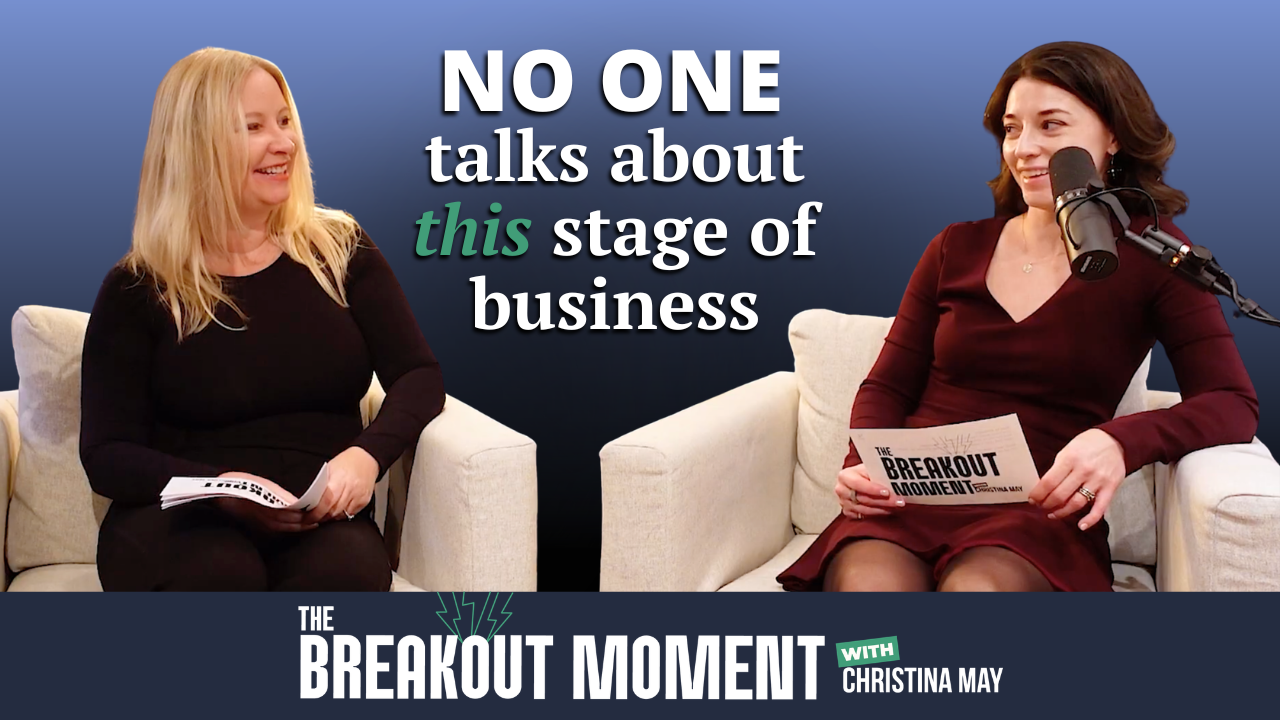
In this episode, Christina May talks with the founder of Integrity Construction about building a successful family-owned business in a male-dominated industry. From starting her career with her infant daughter by her side to growing a respected construction company, she shares lessons on resilience, adaptability, and why long-term success comes from reputation and execution, not from simply checking boxes. It's a candid conversation about leadership, entrepreneurship, and the mindset that keeps businesses growing through change.
Christina May: Well, welcome to the Breakout Moment.
Terry Egley: Thank you.
CM: So happy to have you here with us today. And I'm really excited to focus in on—we get a lot of family businesses. A lot of companies are family-held. It's a legacy. It's a generational thing. But it's very, very few and far between that I get to talk to a mother-daughter duo, so I'm super excited to dive into that and your journey and what that moment was for you where you decided, "Okay, this is the thing that's going to change it for me." So, why don't you start off talking about how your daughter started in construction at three months old?
TE: So, I was wanting to be a stay-at-home mom. It was not really in the cards for me to do so the next option was to try to figure out how to work from home. My mother was in property management, and she knew a commercial general contractor that was just starting out who needed somebody to type up their contracts and type up their subcontractor, literally on a typewriter, not computerized. It was all type writer stuff.
CM: I'm an elder millennial, I remember what a typewriter was.
TE: So, I did that and had my daughter. I was nine months pregnant at the time, and I started doing all this when she was about three months old, the contractors are like, look, I really need you to come into the office. Like, well, the only way I could do that was if I could bring my daughter with me. So there we were, off when she was three months old and had to work every single day. Got her little work boots, and there we were.
CM: I love that.
TE: Well she had to look the part, you know?
CM: Yeah.
TE: So, yeah, she started in construction when she was three months old. And then fast forward to 2012, I started the business, literally after being told, “If you start a woman in general contracting company, people are going to beat down your door and want to just give you money.” I'm waiting for that to happen. Still hasn't happened. But, I was in it for about a year. Project management, doing all the bids, typing up all of my own things, acting as a superintendent on job sites. It was very exhausting. Yeah, I did that for a year. And then in 2013, my daughter was nine months pregnant as a nursing assistant, and they were asking her to do things that she physically could not do and in the state that she was in.
CM: Right.
TE: So she came to me in tears one day and was just like, “I can't do this. I can't do the nursing thing.” I'm like, well, I could use her. So she started with me in 2013 and has now risen to vice president, is well-versed in construction and is just killing it.
CM: I love that.
TE: It has been fantastic. And she's my best friend. And it's cool to be able to hang out with her not only in the business, but, you know, we hang out after work, we do everything together.
CM: That's amazing. So it sounds like you guys have these amaz- not just an amazing business relationship, but a strong mother-daughter relationship. So when you guys, you know, go off on vacation or, you know, go, it's like, do you still talk business or do you guys still have, do you have good boundaries around that?
TE: We have actually, I don't know how we do it. And I don't know that there's a rhyme or reason to how it works. But we do, we have very good boundaries. It’s hard to go on vacation together because one of our phones is going to ring with a problem from somebody.
CM: Right.
TE: But we don't really. We try to keep the business aspect out of it when we're trying to just have our downtime. We've been on girls weekends where jobs have blown up and we're like, oh, God. And both of us are on the phone at the same time. And then we hang up. We're like, okay, let's just get back to enjoying ourselves. But the phones are always on. It's not like you ever get a true break in business. But you take it where you can and you leave it at work when you can.
CM: Well, it sounds like you’ve figured out what that balance looks like for both of you, right? So, if we say balance, I think that's kind of like a charged word.
TE: Right.
CM: There is no balance. Let's let some mythbuster that right away. There's no such thing as balance. But what it comes down to, is what you want, right? And if you enjoy what you do and it sounds like you can see the passion, you do and she does. It doesn't feel like work. You're not living for the weekend, so to speak, Right?
TE: Right. We are both very passionate about what we do. And I think that does help. So, even if something does boil up while we're on vacation, like, okay, you know, where you want to put that aside and get back to whatever else we were doing at the time. So that's a good way of putting it, and the passion that if you love, what is it, if you love what you do-
CM: Yeah, if you love what you do, you’ll never work a day in your life.
TE: One of those things.
CM: Womp womp.
TE: I mean, it's a little bit BS, but it's kind of true.
CM: It's kind of true. If anyone's ever worked in a job that they truly did not enjoy, it has such a detrimental effect on your well-being, your health, etc. So I think sometimes when, especially if you have friends that are not entrepreneurs, don't own businesses, you know, people you associate with, they'll really understand us because they're like, you're working all the time. That's like it's work, but it's not.
TE: Right.
CM: You know, I love what I do. And so it's a different mentality
TE: Right.
CM: And a different way of approaching it.
TE: I agree, a thousand percent.
CM: I think that's important. So now your daughter's a mom?
TE: Yes of three. Three boys.
CM: Three boys? Okay.
TE: Yes, and she's able to bring it to them to the office.
CM: Okay. So you're continuing the tradition?
TE: Yes, yes absolutely. I have my oldest grandson, who's going to be 13 in July.
CM: It's just a number.
TE: Yes, just a number, but teenage boys, I'm a little nervous, but he's still really cool. Really sweet. He's great. He's already, he's either going to be a pilot or run Integrity, but he thinks he's going to do both. I'm not sure how that's going to work.
CM: Okay.
TE: The other two are already in line that, you know, they're going to either work for their brother or they're going to kick him out eventually. So it truly is a family atmosphere. At least with her and the boys. My son has a daughter. He worked for me a little while, and then he started his own thing.
CM: So the entrepreneurial streak runs in the family?
TE: Apparently, it does, who knew?
CM: I think that's wonderful.
TE: Yeah, It's it's fun.
CM: It is, it's a lot of fun. So you mentioned, and I want to come back and pick it up. You know this idea of women in construction, women-owned business, or you know, fill in the blank owned business, You know, that's something that was brought up to me, 13 plus years ago, when I started as well. Even though I feel the practice of, we started out as marketing, we've also now moved into revenue operations. It is a little bit more, shall we say, “female-oriented”, especially on the marketing side. It's a little bit different, but it was still brought up to me.
TE: Right.
CM: And it was just something that I did not really pursue. I didn't really see it as a differentiating angle, but you in construction, it is something that is really brought out, really touted. Talk to me a little bit about that journey for you and what that's look like and, and how you have pivoted and navigated that.
TE: So I mean, obviously, construction is still very male-dominated. You're told as a woman in this male-dominated business, people are just going to beat down the doors to work with you and things like that. And I went in, I started the business believing that, like, I'm supposed to be a millionaire right now, I don't know what is happening. But I have learned through it that it's less my gender and more what I bring to the table. It’s allowed me to grow and establish the business. You know, I still have to prove myself every day. I walk into a client who might be a male that's like, oh, gosh, you know, she's wearing pink. How would she possibly know what's going on?
CM: This is called branding. For anybody that does not know this is consistent branding. Kudos.
TE: Yes, and my male employees are fully supportive. God bless all of them. But, it's you still have to show up and you have to prove yourself and you have to. It's not about being a female in the business. And I'm sure there have been women that have started the business and things have gone maybe differently for them, where they are able to capitalize on, hey, I'm a woman in business, give me the work, and it's happening that way for them.
CM: Right. From a contracting perspective. And so for anybody that isn't familiar, there's this idea that there are a certain number of contracts that are awarded, based on just those factors alone. And, you know, yes and no.
TE: Correct, correct. So I never capitalized just on the woman-owned aspect other than pink, but I love pink. That was just-
CM: It’s your color!
TE: I chose for my company. Has nothing, I guess has something to do with being a woman-owned because it's a little bit of a bragging right, but only because I've established myself as a reputable contractor. You know, we do what we say we're going to do. We follow through. We're good to our clients. We're honest. We're, you know, we're integrity.
CM: That's right.
TE: So, that is more important to me. And maybe that's the other aspect. Maybe I didn't push the woman part in people's faces enough to actually make money with that angle. I don't know.
CM: You know, but when you think about the things that we buy, the things that we purchase, I'm not- I'm going to support a quality company. I'm not going to support a company that doesn't have a quality to them, just based on a certain characteristic, just to check a box. I mean, if it checks both boxes, amazing, right?
TE: Right.
CM: Right? We vote with our wallets in business. Personally, of course, but you wouldn't just simply say, well, I'm only going to buy from you just because you're a woman or, you know, you're purple or whatever, or you drive this kind of car like, we make micro judgments all the time.
TE: Right.
CM: But I think the thing that people need to hear is you still got to, you got to do the work, you got to pull through.
TE: Right.
CM: It's not just about checking a box.
TE: Right.
CM: Which I think is a hard lesson to learn sometimes. When you, when you're sold in the beginning, cash is just going to be falling from the sky.
TE: Right, Exactly.
CM: Yeah. So we'll just, we'll just, solve that for everybody in this episode. That's never going to happen.
TE: It does not happen that way. And then I sat back and waited and it, yeah, it did not. It's not that I didn't actually I lied, I didn't sit back and wait. But I did promote that angle of, you know, hitting all of the things. I've got my minority, MBE, and DBE through the state of Maryland. I started all of these pre-bid meetings. I know that there's an avenue there for revenue. I wasn't, excuse me, I wasn't able to discover it. You know, there's 25 other general contractors there that all had their minority status. And I'm like, well, how are you going to make money doing this?
CM: Right now, it's no longer unique. It's like when you fly now, I just got back from a trip, and the line for pre-check was longer than the general line for security. And I was like, hold on a second. I spent money and did a whole bunch of things so that I could go faster.
TE: Right.
CM: And now if everybody has it, it's no longer special, right?
TE: Exactly, yep.
CM: And I think that's what really does come down to the point.
TE: One thousand percent.
CM: So, you mentioned that there was a moment before you started the company that you thought maybe I'll be an artist. Talk to me a little bit about that and how you pull that maybe now into, you know, something that's looked at as being very, you know, square bricks and sticks.
TE: Right, right. So, I was laid off from a position that I had been with for ten years. I just bought a house. I had left my ex-husband at this point. I had two young children, sitting on my porch swing in my new house, and I had no idea how I was going to afford without a job. You know, maybe I should just be an artist. And then it occurred to me I have no artistic ability, so that wasn't going to work. And right about that time, I had a subcontractor that I worked with previously call and say, hey, I know this company who is looking for a project manager. Are you interested? I'm like, well, I mean, I already started this construction thing now, so I might as well pursue it. Went to work for them. So I have nothing but the most wonderful things to say about the company that I worked for. I learned so much. I literally have so much respect for him. And it was actually also a family run business. And how he handles things and did things, and I probably would be there still today if it wasn't for the money that was going to come raining from the skies. So yeah, I, I realized that that was the path that apparently somebody was telling me I needed to go down. So I went to work for them and then started my own business. The artist thing wasn't going to happen.
CM: Yeah, but, you know-
TE: It takes talent.
CM: It does. You know, I sometimes spend a lot of time trying to convince people who say that they aren't artistic, that what you actually, what you do is very creative. It’s this little idea of you're an artist if you're like, can compose music or you can paint a painting, but you're also an artist in adjacent ways. You're an artist if you, if you're building something and you built a business.
TE: You know what, that is really, that’s absolutely accurate. In my mind, an artist was saying, you know, I was going to be the next Picasso or, you know, like I was going to make millions doing something like that. But you're right. I mean, it does take in, I guess, an artistic ability to be able to, to do what I do. And I'm glad you said that, because it makes me feel like I did achieve that porch swing, wine, drink, and dreams.
CM: You did. That was your moment where you were like, all right, I got this.
TE: I got this.
CM: What do you remind yourself on days where it gets tough? Because we all have those. I think those are the moments, like we all talk about the end of it, right? Like, we're still here, we're still in business. We're employing people like we're, I hate to say, eye roll, living the dream. The dream some days will kill you.
TE: Yeah. Right, right.
CM: Well, what are some of the things or some of that you work through that it's usually, it's those tough moments, it's right before things really start to push through? And even you mentioned, like, I'm sitting on my porch swing in my new house with my brand new mortgage. I don't have a job. I'm single and I got two kids.
TE: Right.
CM: Let's start a business. Let's go work somewhere. Yeah, it's that adversity that I feel like sometimes is the, “that moment”. What are, what do you use to kind of get yourself through?
TE: I think what comes to mind, honestly, I have a sign behind my desk that says everything is figure-outable.
CM: I love that.
TE: It's true. Like, you know, if when things are slow, I'm like, oh gosh, which I have to put on right now to ramp things back up. What is it that I have to do to make sure that, you know, the billings are coming in for this month? What do I have to do to make sure that this job runs smoothly? I think it's just everything is figure-outable. You can't give up. You just have to plug away and figure out, how to pivot, how to. Prior to Covid, we did mostly office spaces.
CM: Covid changed that for you.
TE: It did change that. But fortunately, before that, and I would love to say that this was my major brainstorm, I had somebody come to me and ask about doing a lab, and I'm like, yeah, we can do that. Little did I know what was entailed in the lab, but we figured it out, and it wasn't the smoothest job. We made mistakes, but we owned our mistakes, and we corrected them, which enabled us to continue doing work for the person. We started getting into some restaurants, minor little ones, you know, this and that. And had that not happened I guess been brave enough to take it on at that point in time. We wouldn't be in business today. Office spaces, you know. They're starting to come back, thank god, but I don't really think-
CM: But everything has a cycle.
TE: It does have a cycle.
CM: Yeah, you know?
TE: When they come back full force, we're ready for them because we've done them. But in the meantime, we've got the other past experience under our belt that. We love restaurants and retailers and small businesses and all anything that comes our way, we're willing to tackle it. So I think that's definitely helped sustain us for the long run.
CM: I think something that everyone can kind of take away, that I don't think it's talked about enough, is that there's this focus that we should niche in so tightly, especially my industry, is to blame for this, like positioning. We talk about positioning all the time, and what I mean by that is it's like this is your value prop. This is what you do. This is your elevator pitch. It's very easy to understand right? And we're supposed to make it so narrow so that, you know, your ideal client is very, very easy. And sure, that makes the marketing end of it and the sales end of it a lot easier because you're like, I'm going after that one right there.
TE: Right.
CM: It's really, really crystal clear. Where that blows up in your face is in these seasons where, I don't know, this thing called the market changes and suddenly that person is spending money anymore, right? Their business has changed, things have pivoted, etc.. And you need to figure out where are those adjacent opportunities. And I think that ability to be able to see adjacent opportunities is what keeps businesses like yours, like mine, around for the longer haul, because we weren't so bought in on this very narrow idea.
TE: Right.
CM: And we were, you kind of almost can kind of read the tea leaves. Now, how do you get your team though, like you were like run in and be like, hey, we're going to do a lab and they're like, what did she have for breakfast? We're not doing a lab,
TE: Right.
CM: We don't know anything about a lab,
TE: Right.
CM: How do you because, you know, we were talking briefly before the camera started rolling about employee mentality versus employer mentality and employer mentality being waiting to be you're comfortable, like being told this is the next thing. Whereas, you know when you're, when you're an entrepreneur, you're like looking for that next thing all the time,
TE: Right.
CM: So how do you encourage your team to kind of run in along with you?
TE: Well, fortunately, I have a very versatile team who, they trust me. They know that if I'm saying what we need to do this, then it is the right decision for us as a company and for them as employees, and they back me up. I think they have the same mentality. I've built a strong enough team that they agree with. Everything's figure-outable. You can never be afraid to ask questions. I don't know everything. Nobody knows everything. So when you bring in people around you who know more, you know, for the lab, I hired some subcontractors who knew what they were doing.
CM: The lab.
TE: I brought, I brought in, you know, the best of the best that I had and asked all the questions in the world like, wait, how does this work? What are we supposed to do here? These kind of things that, enabled us to do it. And I think just building a team that can see your vision and participate in it is extremely helpful to scaling.
CM: I agree with you on that. Being able to articulate that vision.
TE: Right.
CM: Sometimes I don't have it all figured out. I'm never going to have it all figured out.
TE: Right, Right. We're going to wing it.
CM: We're going to wing it. It's going to be fun.
TE: Right? We’re going to figure it out.
CM: Order a pizza.
TE: Exactly.
CM: We're going to make mistakes. I've mentioned here in the office many, many times, we don't do heart surgery. If you just keep that in mind. No one's going to die.
TE: I use that a lot.
CM: It's everything to your point. Everything is figure-outable. And you know what? So what if you make a mistake? We made a mistake. That means I learned something.
TE: Exactly. So if you don't make mistakes, you're not learning. That's for sure. We have. I learned a lot through the years.
CM: We've made a lot of mistakes.
TE: It's just part of it. You have to be brave enough to make the mistakes, though.
CM: Yes you do.
TE: And some failure brings out good results in the end sometimes. So I don't know if failure is the right word. Mistakes bring out good results in the end.
CM: Failure is a wonderful teacher.
TE: It definitely will teach you lots of things.
CM: Absolutely. Well, thank you so much for being here today.
TE: Thank you.
CM: I really enjoyed it. And, maybe we'll follow up and get the, get the side from your daughter.
TE: Oh my gosh, she would hate me for doing that. But she would definitely be down.
CM: All right. All right. Well, we'll see if we can do it.
TE: All right, I love it.
CM: Thanks so much.
TE: Thank you.
CM: We'll see you next time.
.png)